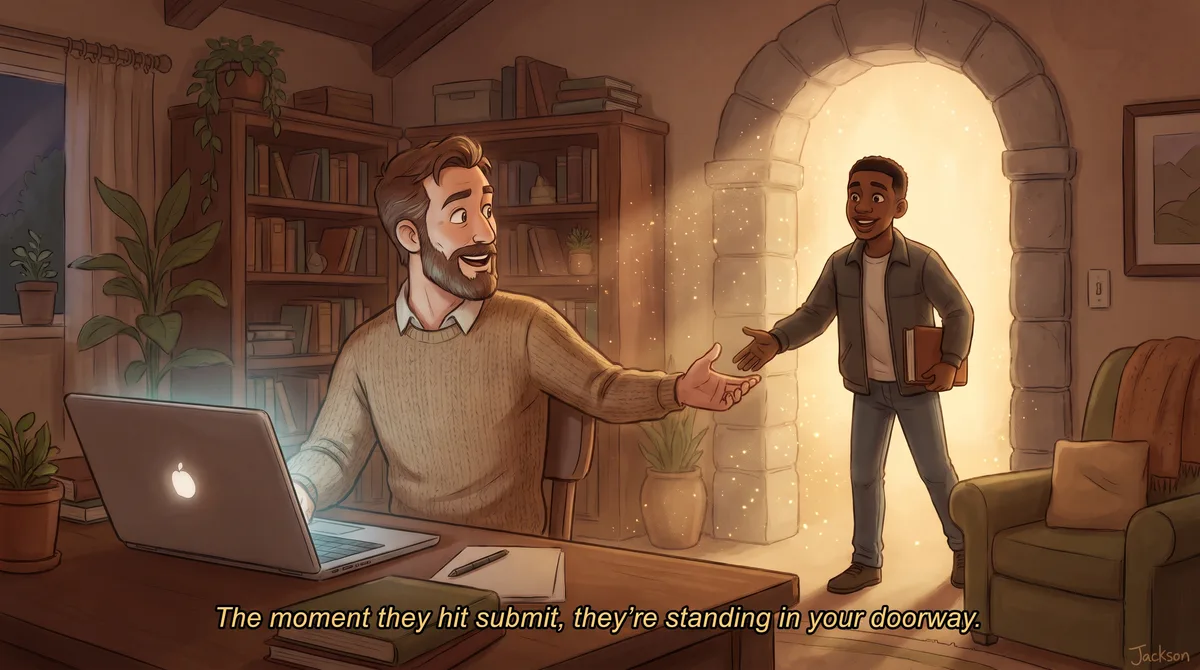
I think one of the greatest lessons I learned from Claude Hopkins is that people buy things as individuals.
It sounds obvious. But look at how much advertising treats people as a mass.
We build a funnel, put people into it, and hope the sequence moves enough of them toward a purchase.
Claude had a different way of thinking about it.
If someone wrote to ask about a sewing machine, he wanted to treat her like she’d walked into a store asking about sewing machines.
She had one thing on her mind.
Why send her the same general catalog everyone else got?
I think about that whenever someone requests a book or downloads a guide.
Imagine your opt-in page is a magic portal. The moment they press submit, they’re standing in your office doorway saying,
“Hi, I’m here about the book.”
What would you say to them?
Years ago, I offered real estate agents a free book about growing their business.
When someone requested it, I’d welcome them and ask for their mailing address so I could send a welcome kit.
If Josh wrote back from Lakeland, I could say, “Oh, you’re in Lakeland. I’ve been looking for someone there.
Would you have time to work with a couple of new buyer clients a month?”
That question worked because I’d paid attention.
Josh had asked for a book about growing his business, told me where he worked, and given me an opening to ask about his capacity.
That’s the seed of the nine-word email: short, personal, expecting a reply.
You can reach thousands of people with an ad or an email. But when one person raises their hand, you have the chance to talk with that person.
What would you say if they were standing in your doorway?
The most useful thing your next email might do is get one person to write back.
The most useful thing your next email might do is get one person to write back.