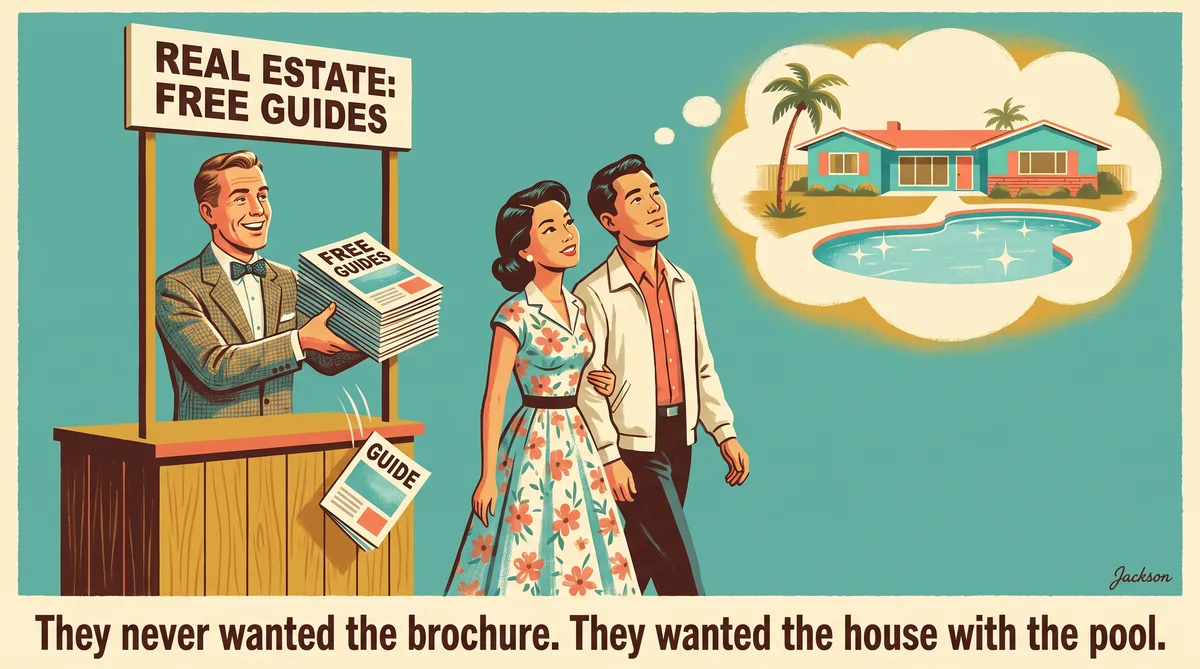
One of the biggest mistakes in marketing is thinking people want your information.
They don’t.
They want what the information will help them achieve.
That sounds obvious, but it completely changes how you treat the people who respond to your ads.
I found a note in one of my journals from 1996 that reminded me where this idea really took hold.
At the time I was running ads offering a free Guide to Halton Hills. People would call a recorded message, leave their name and address, and we’d mail them the guide.
Then I changed one sentence.
Instead of simply asking for their contact information, I added:
“Tell me a little about the kind of house you’re looking for, and I’ll include information on the newest listings that fit what you want.”
The very next caller said, “We’re moving from Mississauga. We need four bedrooms and we’d love to have a pool.”
Nothing else had changed.
The ad was the same.
The guide was the same.
The only difference was that I stopped acting like they wanted my guide and started acting like they wanted the outcome.
That’s when I realized something that has shaped almost everything I’ve done since.
Your lead magnet isn’t the product.
It’s the on-ramp.
Nobody wants your ebook, your report, your checklist, your webinar, or your catalog for its own sake. They want the benefit waiting on the other side.
So treat them like someone you’re responsible for helping.
Don’t sit back waiting to see whether they’re “good leads.”
Assume they raised their hand because they’re trying to solve a problem. Your job is to help them cross the river to the promised land.
Great copy should promise the benefit, not the information.
People naturally respond to someone who’s already helping them move toward what they want.
The businesses with the highest lead conversion rates aren’t usually the ones generating the most leads.
They’re the ones that care the most about the people behind them.