If You Have Great Ideas But Struggle to Execute Them, Watch This
Watch
Listen
The coastal condo guides were fully formed in my journal in 1997. What stopped them wasn't the idea. It was that somebody else had to do the work.
Good morning.
Wrapping up journal number five. My first year of journaling, spring of 1997, about to start number six.
And looking back through it, there are a couple of things I wish I'd known then.
Because the ideas in here were good. Fully formed. And most of them never got past the first stage.
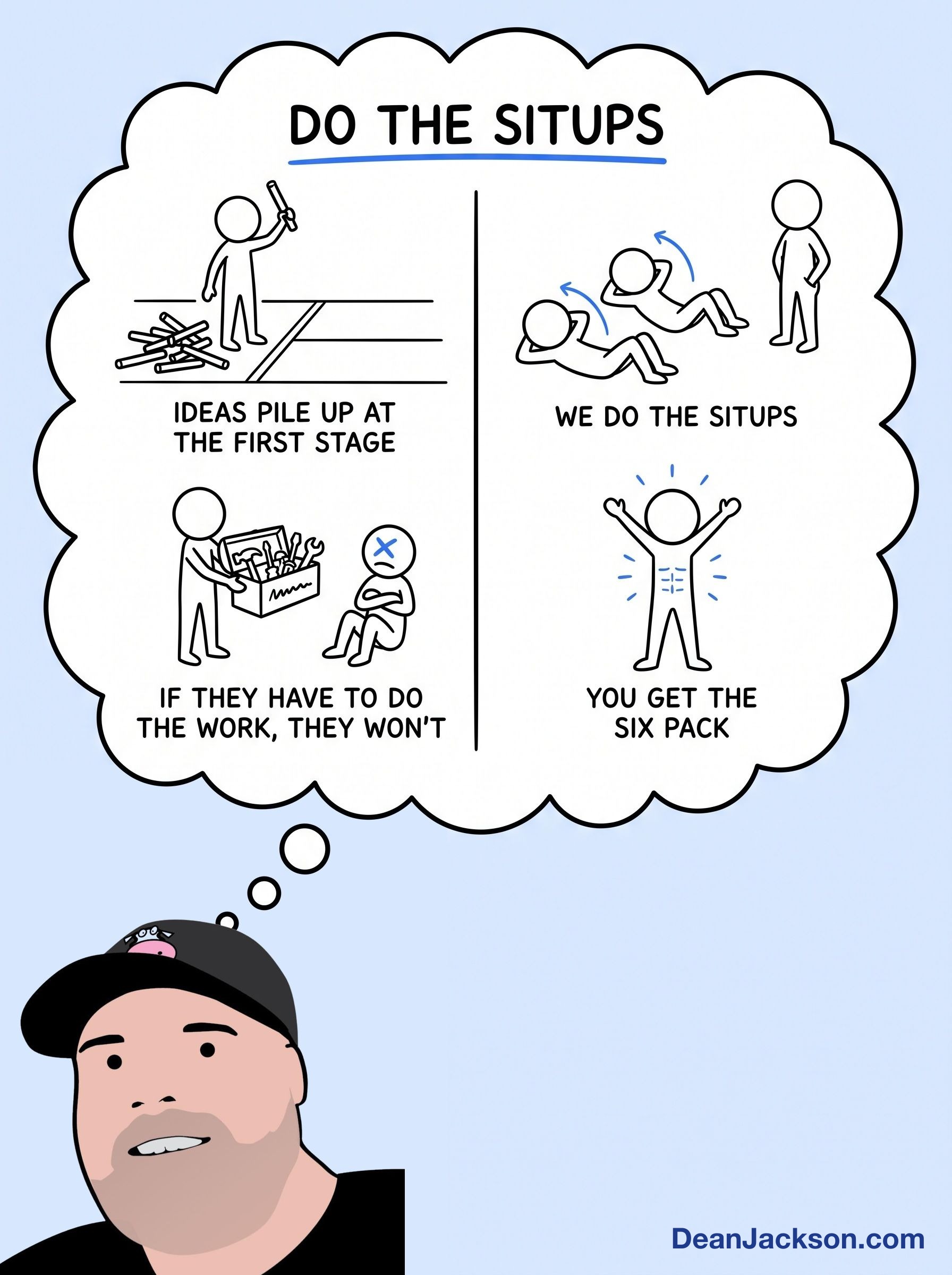
My friend Joe Polish describes it as running a relay race where you carry the baton to the first handoff... and then go back and get another one. And another. Until there's a pile of batons sitting at the first stage and nobody has run the second leg.
That's this journal.
Here's the one staring at me this morning. Coastal Condo Guides.
A drawing of the whole coast of Florida, with a guide for every condo market on it.
And I'd already proven the model. The Guide to Halton Hills worked. Toronto and Beyond worked. Take a contextual wrapper, put a duplicatable model underneath it, and it works in the next market too.
St. Louis and Beyond. Nashville and Beyond. It absolutely could have worked.
So why didn't it.
Because of the way I set it up, the other person had to do the work.
And I've spent thirty years now cajoling people, supporting people, encouraging people, handing them every tool they could possibly need to do the work.
Here's what thirty years of that taught me.
People don't do what they could do. But they definitely do what they will do.
If I could go back, I'd take that same idea and build it the other way around.
We do the situps. You get the six pack.
That's the universally dream come true offer. Everybody wants the six pack. Almost nobody wants the situps.
And the remarkable thing is how much easier it is to actually deliver that now. The companies who have figured it out are thriving. In every category.
The other thing I know now that I didn't know then is that people are different.
Gino Wickman's whole Rocket Fuel idea. Visionaries and integrators. If you're a visionary, you need somebody who can make things happen.
Working Genius says the same thing another way. Wonder. Invention. Discernment. Galvanizing. Enablement. Tenacity. Different people bring different ones.
I didn't understand the real value of a team in 1997. I thought the idea was the thing.
What's amazing to me is how much of the context is still exactly true.
Everybody spends all their money on seven things. Home. Cars. Food. Health. Kids. Money. And me. Every budget is made up of those, and every business sits underneath one of them.
That was true in that journal, and it's true this morning.
But here's the part I had backwards.
You can't think from the top down. It all starts at the bottom and grows up.
As a visionary you see the completed thing. And then going and doing the individual things it takes to get there almost feels like living in the past... because you've already been to the future and you know what it looks like.
That's the reality of it, though. The completed thing doesn't arrive. It gets built.
And if anybody knows how to time travel, let me know.
Here's your nudge for today.
Go and find the idea in your own notebook that never got past the first stage.
Then ask the honest question about it. Does this need somebody else to do the work?
If it does, that's not an execution problem. That's a design problem, and you can fix a design problem from right where you're sitting.
Join me live on the next free 50-Minute Profit Finder call, Friday, October 23 at 1:00pm ET. Save your spot →
Transcript
Auto-generated transcript, provided as supporting material. It may contain errors, and speaker labels are occasionally mis-attributed.
Good morning. Okay, we're wrapping up journal number five, which is about my first year of journaling. And as I'm looking through here, we're about to go into journal number six. And I'm looking, you know, this is now the spring of 1997, heading into summer.
And as I look back, there's a couple of things that I wish I had known then what I know now because I had really great ideas that were fully formed back in 1997 that never got past the my friend Joe Polish talks about running a relay race and realizing that, you know, He's got a lot of these uh you know batons that he takes to the first stage and then they all just pile up at the uh at the first stage. And I realized as I saw this drawing, this illustration of my coastal condos guides uh concept all around the the coast of Florida. I already had proven the model with Toronto and Beyond that you could take a contextual uh rapper and you could place a duplicatable model underneath it. I had done what I did in uh Halton Hills.
And so knowing that that model is duplicatable all the way through. And I shared in another video that one of the biggest things that you run into as you're trying to get other people to do result to get results using the same method that you used is that you have to they have to do the work. And I've realized I know now after 30 years of trying to cajol people and support people and encourage people and and give them all the tools that they would need to do the work. I realize that just like we talked about the other day, people don't do what they could do, but they definitely do what they will do.
And so I know when I got to the level, what I know now is that I would have taken some of these uh ideas like any one of these this coastal condo idea is the same thing for you know Toronto and beyond could be St. Louis and beyond and Nashville and beyond. All of those things it absolutely could work because it's a durable duplicatable model. But I would definitely move in the direction of setting up a system that we do the situps and you get the six-pack.
That's the thing that is universally the dream come true offer. And luckily looking now, it is so much easier to do all of the things that would be required to to make that true. And the companies that have figured it out and are doing it are thriving in all categories. So I look at this and that, you know, I wish I had known then if I could go back now and take I would take these and definitely set up the the whole thing.
I've learned that there's a distinction between what people's unique abilities are and the different types of people. You know, I've met uh Gino Wickman. He's a good friend. I've known him for many many years through strategic coach.
But his idea of through rocket fuel uh is the idea of visionaries and integrators and that whole you know realizing that if you're a visionary that you are uh you need an integrator somebody who can make things happen. I've learned through uh learning about working genius that there are different types of people who bring you know wonder and discernment and invention and galvanizing and enablement and tenacity and all of those things together I've learned the real value of of teamwork. Um, so there's the contexts are absolutely true and it's amazing to me that you know in in one year of these U journals the things that are still absolutely in play today. And it's like one of these things, this whole idea of the seven ways that people spend money as a durable overriding context that every budget is made up of those seven categories.
Home, cars, food, health, kids, uh, money, and me. That that's where all of it is and all the lists of the business underneath it. But I've realized that you can't think from the top down. It all starts by from the bottom growing up.
That's the way it all works. We see as a visionary the completed thing, but realizing that now going and doing the individual things that it takes to get to that point almost feels like living in the past because you've already been to the future and you see what what's possible. But that's the reality, you know. I think we're gonna these themes are going to make a continued appearance as we move into uh journal number six and we start keep marching through these 30 years of insight.
But boy, if anybody knows how to time travel, let me know. I got a funny email the other day from Rick. It says, Dean, question. are you saying you can teach me to make fat stacks by hanging out at a pub drinking coffee like you?
And I laughed to myself because I was thinking, you know, yes, I I can do that. That's what I do. is the funny thing. What I really realized is that every idea that I've had, every dollar that I've made over the last 30 years has gone through my brain, through my pen onto a piece of paper in my journal before it went out into the real world.
And if I can turn people on to that activity as a driver for what to do, what to think about, what to ask yourself to draw out, what the next most valuable action is for you, and how to find the most profitable things that you can install in your business. I'm all for it. So this Friday at 100 pm I'm going to do for the first time a 50inute profitfinder workshop and you're going to join me live on Zoom and we're going to go through a 50inute exercise. Bring your pen.
Bring a notebook or piece of paper. And I'm going to guide you through a thinking process that will help you identify where the lowest hanging fruit is in your business and maybe some fruit that you didn't even know was there. But I'm going to show you where to look for it. So, it's free.
It's for you. m. this Friday. Just watch.
Go to What did we call the website, Josh? >> 50inut profitfinder. m.
Get BreakthroughDNA Free
Discover the 8 Profit Activators that can transform your business. Get the complete framework, free.