John Paul DeJoria said something at the Genius Network annual event that I loved.
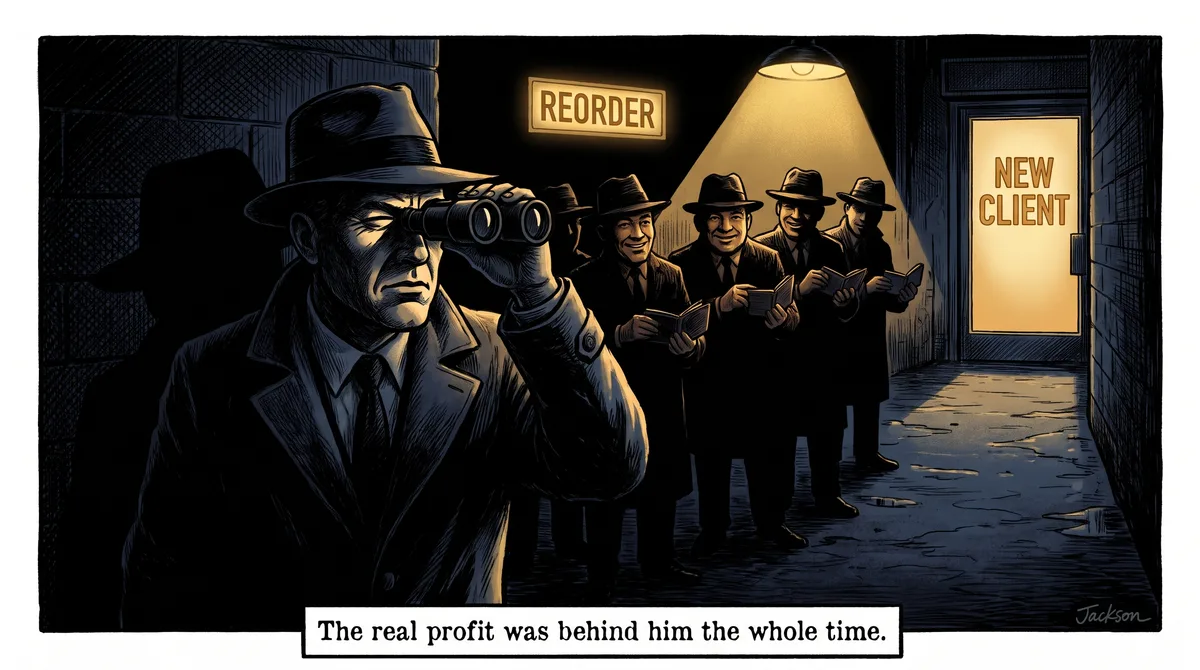
He was talking about building Paul Mitchell and Patrón, and how he intentionally chose businesses where he could be in the reorder business.
That’s a useful lens for looking at your business.
Think about everything that has to happen for someone to buy from you the first time.
They have to discover you. Understand what you offer. Decide they trust you. And feel confident enough to move forward.
There’s a lot involved in getting to that first transaction.
But once you’ve delivered a great experience, you have someone who already knows you, likes you, and trusts you.
What have you designed for them?
I was looking at a page in my November 1997 journal where I was thinking about after-sale service.
Even then, I was asking what happens AFTER somebody does business with us.
It’s easy to put all your attention on getting the sale and then turn right back to finding the next person.
But the person you just helped may be at the beginning of a relationship that could last for years.
If you sell something people use up, the reorder opportunity is pretty clear.
The interesting question is whether you’ve made continuing with you easy and natural.
Do you know when they’ll need more?
Do you reach out before they run out?
Is there a next step that helps them get even more value from what they’ve already bought?
You don’t have to wait for them to remember you and start the buying process all over again.
You can architect what happens next.
Here’s a useful place to start:
Look at the last ten people who bought from you.
What would be the most helpful thing you could do for them now?
That might reveal a profit opportunity sitting much closer than your next new lead.
Being in the reorder business is much easier than starting from scratch every time.
Being in the reorder business is much easier than starting from scratch every time.
Dean