For years I thought I was bad at time management.
Looking back through Journal Number 3, I can see I was trying to solve a problem I didn’t yet have a name for.
Today we’d probably call it executive function.
At the time, I just thought I wasn’t very good at being a “normal” person.
I had pages of notes trying to figure out why traditional productivity advice never seemed to stick.
One page was titled, essentially, Nine Reasons Time Management Doesn’t Work.
30 years later, I think it’s even more relevant.
The biggest realization?
Time isn’t really the problem.
Decision-making is.
If you’re an entrepreneurial brain, you don’t see one good option—you see twenty.
They all seem possible. They all seem important. Choosing one means not choosing nineteen others.
That’s exhausting.
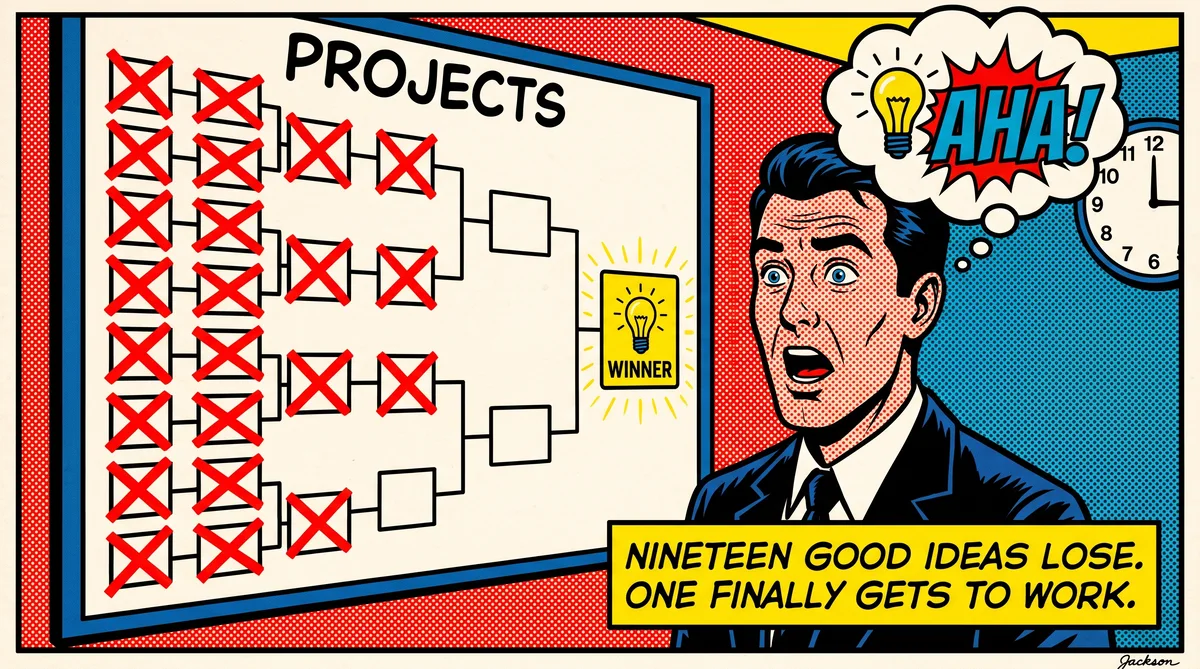
One little trick I discovered was creating an elimination tournament.
I’d put eight projects into a tournament bracket and let them compete until there was only one left standing.
It sounds silly, but it gave my brain permission to focus.
Another breakthrough was changing the time frame.
We spend too much energy thinking about this week, this quarter, or this year. None of those are actionable.
The only time you can actually do anything is the next few minutes.
These days I think in 10-minute blocks. We get about a thousand waking minutes every day. That’s one hundred little opportunities to move something forward.
The question isn’t “How do I manage my time?”
It’s “What’s the best use of the next 10 to 100 minutes?”
That single shift removes a surprising amount of overwhelm.
Looking back now, I’m struck by how little this was about productivity and how much it was about designing an environment that worked with my brain instead of fighting it.
Maybe that’s the real lesson.
Stop trying to manage time.
Start managing attention, decisions, energy, and your environment.
Time will take care of itself.