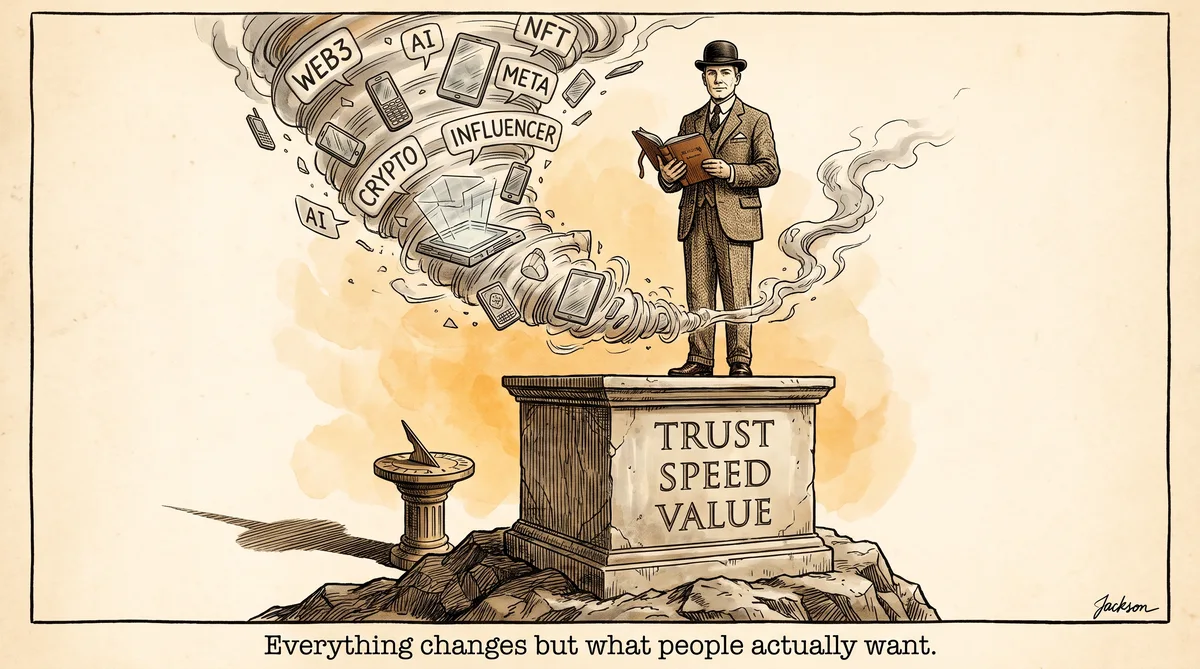
One of the questions I ask myself whenever I see a new trend is:
What's not going to change?
Everyone wants to know what's next.
What's the next technology…platform…marketing strategy?
Those are interesting questions.
But I've found a much more valuable one.
What will still be true ten years from now? Or thirty?
When I look back through my journals from the mid-1990s, I'm struck by how many of the same observations still hold today.
People still want results sooner rather than later.
They still struggle to delay gratification.
They still make decisions based on their own self-interest.
They still want someone they can trust.
When I was helping people buy and sell homes, I eventually realized that sellers wanted exactly the same three things they want today:
Sell quickly.
Get the best price.
Have the fewest hassles.
Nothing has changed.
The tools have changed…but the human desires haven't.
The tools have changed…but the human desires haven't.
That realization completely changed how I thought about marketing.
Instead of chasing every new tactic, I look for the permanent parts of the equation.
Instead of asking, "What's working right now?", I started asking, "What will probably always work?"
It's the same philosophy that built Amazon.
Jeff Bezos once said he preferred investing in the things he knew wouldn't change.
Customers would always want more selection, lower prices, and faster delivery.
Those certainties became the foundation of the business.
I think every business should ask the same question.
What do your customers want today...that they'll almost certainly still want ten years from now?
Build around that.
Because while technology keeps accelerating…human nature moves much more slowly.
The entrepreneurs who create enduring businesses aren't always the ones who predict the future.
They're the ones who recognize what isn't changing—and build everything else around it.